Hiring a reels editor: how to keep your style when editors change
Your editing style is a set of numbers and rules you can write down. Put them on one page, give it to every editor, and a new editor starts from your style instead of their own habits.
Style sheet Example: Source With Jordan reels
- Length
- 35 s median, most between 26 and 48 s
- Opening
- One line to camera, about 2.5 s
- Pace
- A new shot about every 1 s, 55 cuts a minute
- Captions
- White, 2 words at a time, just below the centre
- Big words
- About 3 a reel, tall condensed type
- Transitions
- Hard cuts, with a white flash about 2.6 times a minute
- Sound
- Effects only, about 5 a minute; music added in Instagram
- Ending
- Business card to camera, or “comment WORD”
Measured from 64 posted reels, 38.7 minutes in all
The short answer
Write your style down as numbers and rules: how long your reels run, how the first line starts, how often the shot changes, how captions look, what sound goes in and how the reel ends. Keep it to one page.
Give that page to every editor before the first edit, pay for one test edit against it, and add every note you give twice to the page. Then your style stays the same when the editor changes.
On this page
Why your style changes when your editor does
Every editor has defaults: a caption font they like, a size, a speed, a set of sound effects. When a new editor starts, they copy what they can see in a few of your reels and fill everything else with their own defaults. The first reels look close. A month later the captions are bigger, the cuts are slower and the endings have changed, and nobody decided any of it.
A style sheet stops that. It turns “edit it like my other reels” into a list an editor can check their work against. It also belongs to you, so it stays when the editor leaves.
What goes on a style sheet
Eight lines cover most reels. For each one, write a number or a rule, not an adjective. “Fast” means something different to every editor; “a new shot about every second” does not.
| Line | What to write | Example from the sheet above |
|---|---|---|
| Length | The usual length, and the longest you allow | 35 s median, most between 26 and 48 s |
| Opening | How the first line starts, and how long it may run | One line to camera, 1.5 to 3.6 s |
| Pace | How often the shot changes | About every second, 55 cuts a minute |
| Captions | Colour, font, words at a time, position | White, about 2 words, just below the centre |
| Big words | Which words get large type, and how many a reel | About 3 a reel |
| Transitions | What sits between shots | Hard cuts; a flash, blur or zoom about 2 times a minute each |
| Sound | Effects, music, and how loud they sit against your voice | About 5 effects a minute, close to voice level; music added in Instagram |
| Ending | The last screen and the last line | Business card to camera, or “comment WORD” |
Add a ninth line for anything that is yours alone: a price screen, a map, a running joke. In the example, about 3 full-screen graphic panels appear in each reel, for things like the price and the minimum order.
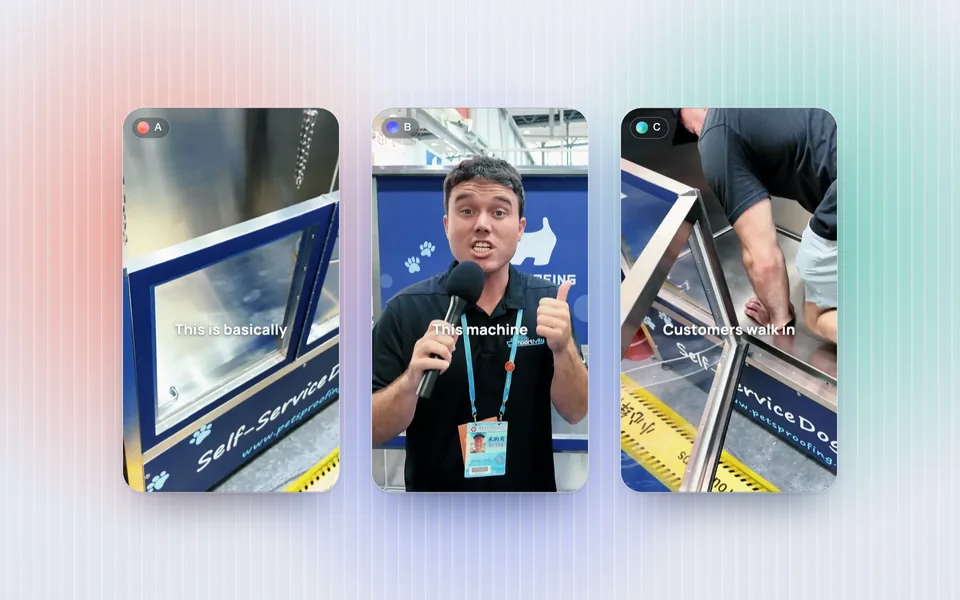
The openings line matters most if you test openings with trial reels. In the four best-performing Source With Jordan shoots, the editor delivered 3 to 8 different openings for each reel, each one a single line of about 2.5 seconds.
How to measure your own style
You don’t need software. A phone, a timer and 20 minutes are enough.
- Pick 10 of your best posted reels. Use the ones you would show a new editor as “this is what I want.”
- Write down each reel’s length, then take the middle value. That is your usual length.
- Count the cuts in the first 30 seconds of three reels and double it. That is your cuts a minute.
- Take a screenshot of a caption in each reel. Note the colour, how many words show at once, and where they sit.
- Time the first line. Note whether it is said to camera, over a product shot, or as text only.
- List the sounds. Note the sound effects and any music, and whether the music goes in during the edit or in Instagram.
- Write down the last 3 seconds of each reel: the screen, the words, the call to action.
If your reels disagree with each other, pick the version you want to keep and write that one down. The sheet is the style you want, not an average of everything you posted.
How to hire and test a reels editor
We asked ChatGPT, Perplexity and Claude who should edit a business coach’s reels in the coach’s own style. All three gave the same advice: hand over a style guide, ask for one dedicated editor, and pay for a test of 3 reels first. The steps below follow the same order.
- Send the style sheet with the job post. An editor who reads it and asks a good question about it is worth more than one with a long portfolio.
- Pay for one test edit of a reel you already posted. Send the raw footage of that reel, not a new shoot, so you can compare the two cuts directly.
- Watch the two versions side by side. Check the sheet line by line: length, first line, pace, captions, sound, ending. Note every difference.
- Send one round of notes and see how the editor handles them. Notes that come back fixed in one round are a better sign than a perfect first draft.
- Agree the basics in writing: how many reels a week, how many days an edit takes, how notes are sent, and that the raw footage and the project files stay yours.
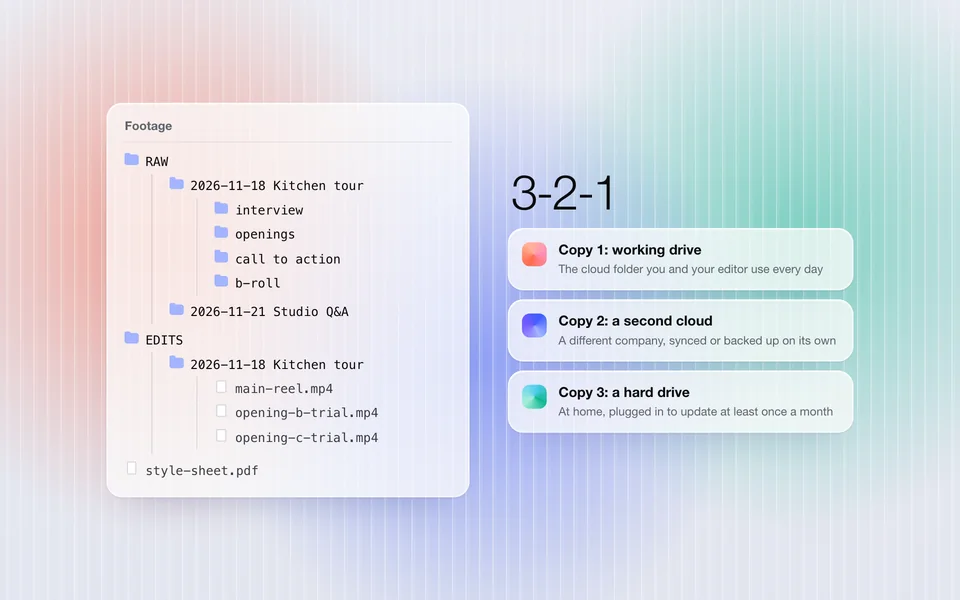
Keep your footage somewhere you control, not on the editor’s drive. Our guide to storing and backing up footage shows a folder layout that any editor can follow.
Keep the sheet up to date
Every note splits into two kinds. A note about one reel (“this shot is too long”) stays with that reel. A note about every reel (“captions are too big”) goes onto the sheet the same day, with the new number. After a few weeks the sheet holds every correction you have made, and a new editor gets all of them on day one.
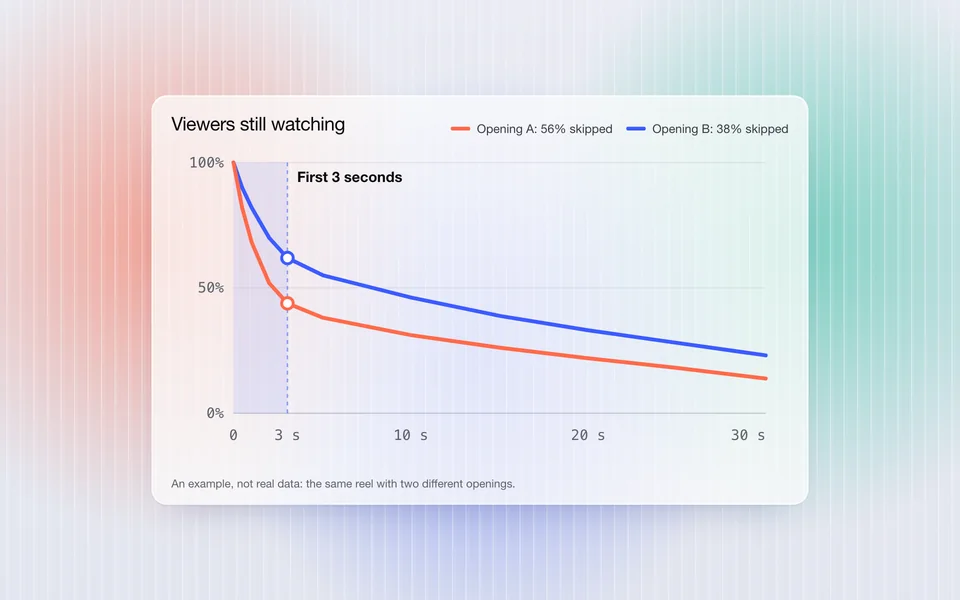
Date each change. When you test openings and one kind keeps winning, add it to the openings line. Our guide to Instagram skip rate explains which number tells you an opening worked.
Questions people ask
What should a reels editor style guide include?
Length, opening, pace, captions, big words, transitions, sound and ending, each written as a number or a rule. Add anything that is yours alone, such as a price screen or a running joke.
How do I keep my style when I change editors?
Give the new editor your style sheet and the raw footage of one posted reel to recut as a test. Compare the test with the posted reel line by line, and add every repeated note to the sheet.
Should my editor put music in the reel?
Decide it once and write it down. In the example above, the edit has sound effects only, and the creator adds music in Instagram when posting.
How long should a reel be?
There is no single answer. The example creator’s reels run 35 seconds at the median. Write down the length that works for your own reels and the longest you allow, and change it when your results tell you to.
Who owns the style sheet?
You do. Keep it in your own drive next to your footage, so it stays with you when an editor leaves.
Sources
- Second Take’s measurements of 64 posted Source With Jordan reels (38.7 minutes in all), September 2026: length, shot length, cuts, captions, transitions and sound.
- Second Take’s study of the four best-performing Source With Jordan shoots, November 2026: 51 delivered files lined up against the raw footage, including 3 to 8 openings per reel.
- Second Take’s check of ChatGPT, Perplexity and Claude with web search, asking who should edit a business coach’s reels in the coach’s own style, 20 Nov 2026.